Surface Area vs Volume: Units, Differences, and Examples
Quickly learn when to use surface area or volume, how square and cubic units differ, and see worked rectangular-prism and cylinder examples with units.
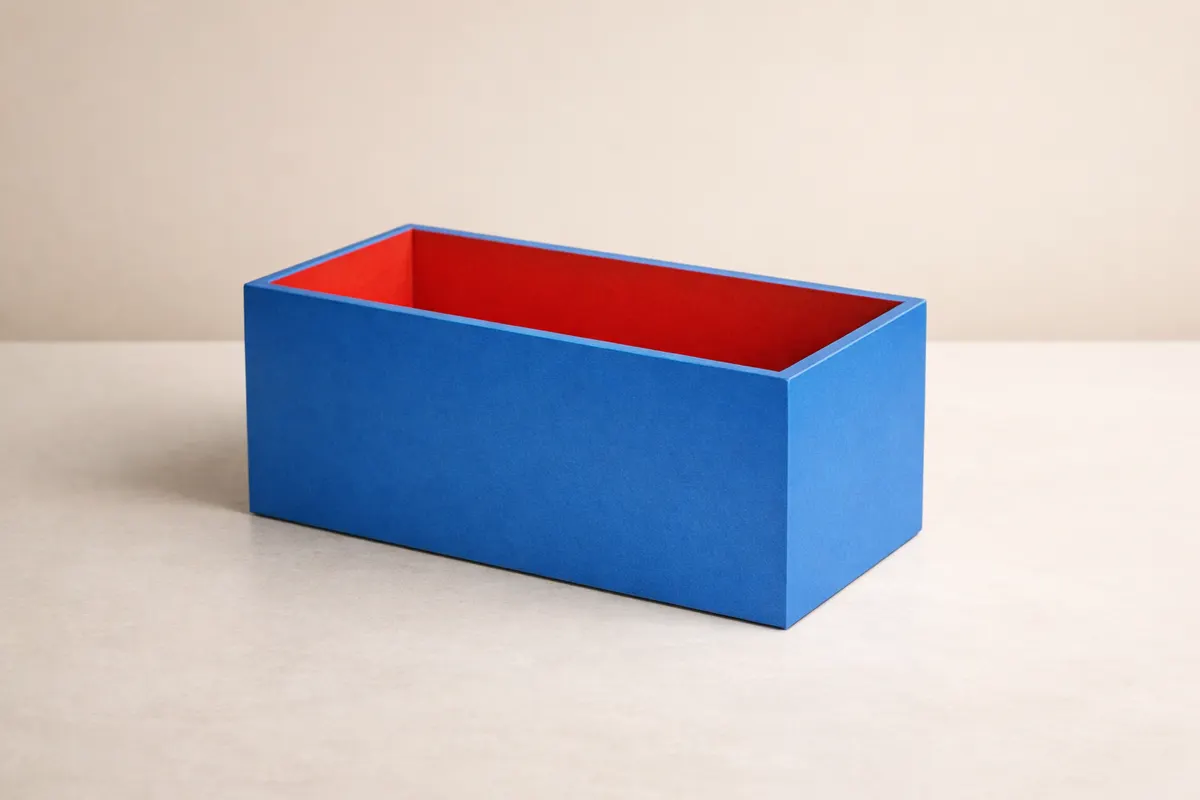
Quick answer: when to pick surface area or volume
Surface area vs volume asks two different questions. Use surface area when the problem wants to know how much exterior material, paint, or wrapping is needed to cover the outside of a 3D object — the answer will use square units (for example, square meters). Use volume when the problem asks how much space the object contains or how much liquid, sand, or other filler it can hold — the answer uses cubic units (for example, cubic meters).
A quick rule of thumb: keywords like “cover,” “paint,” “wrap,” or “outside” point to surface area; words like “fill,” “capacity,” “hold,” or “how many liters” point to volume. Always check whether the problem includes or excludes faces (an open-top box excludes the top) and whether dimensions are given in consistent units before calculating.
- Surface area: amount of outside to cover — units: square (m², cm²).
- Volume: inside capacity — units: cubic (m³, cm³).
What surface area and volume mean in practice
Surface area is the total area of all the exposed faces of a three-dimensional object. For a rectangular prism, that means adding the areas of its six rectangles; for a cylinder it includes the circular top and bottom plus the curved side. Surface area answers questions such as “How much paper to wrap this box?” and “How much paint to coat the exterior?” because those tasks cover surfaces measured in square units.
Volume measures the three-dimensional space inside an object. For solids like prisms, cylinders, and spheres, volume is how much material would fit inside if you filled it completely. That’s why capacity questions for tanks, bottles, or trash bins use volume and report answers in cubic units or liters.
Units tell you which quantity to use. Area formulas produce results in square units because they multiply two linear measures (length × width). Volume formulas multiply three linear measures (length × width × height), which produces cubic units. The distinction is not just notation — it reflects fundamentally different physical questions.
From a coordinate-geometry lens, surface area comes from integrating area elements over a surface, while volume comes from integrating volume elements through a region. For most school problems this reduces to familiar formulas, but the same unit checks apply: count the number of linear dimensions multiplied to reach the final unit.
Key clues that tell you to use surface area or volume
Read the verbs and objects in the problem. If the task mentions coating, covering, wrapping, painting, or thermal exposure, it usually requires surface area. If the task asks about filling, capacity, weight of a fluid inside, or how many unit cubes fit inside, it usually requires volume. Problem wording is the single most reliable initial clue.
Watch for unit cues. If the expected answer is in square units (cm², ft², m²) the problem targets surface area; if it asks for cubic units (cm³, m³) or liters (L), it targets volume. If the problem omits units, convert given linear measures into consistent units first and then infer which type of unit would make sense for the context.
Look at the physical object and the real-world goal. For example, a cereal box where the question is “How many square centimeters of cardboard?” is surface area. The same box with the question “How many liters of cereal does it hold?” is volume. Also check for modifiers such as “total surface area,” “lateral surface area,” “closed,” or “open-top” — these change which faces are counted.
Finally, contextual clues can indicate partial or combined answers. A problem about packaging might ask both: the manufacturer wants surface area for printing design and volume for capacity. When in doubt, list both quantities and justify which one the problem actually asks for.
- Verbs that point to surface area: cover, paint, wrap, coat, exterior, skin.
- Verbs that point to volume: fill, hold, capacity, how many unit cubes, liters.
- Unit hints: square unit → surface area; cubic unit or liters → volume.
- Modifiers to check: open/closed container, lateral vs total surface area, interior vs exterior.
Step-by-step workflow
1) Identify the question precisely. Circle the words that indicate covering (surface area) or filling (volume). If the problem is ambiguous, note both possibilities and state which one you will compute and why. This prevents solving the “wrong” problem and makes your reasoning clear on tests or homework.
2) Confirm the object type and formula set. Match the object — rectangular prism, cylinder, sphere, cone, etc. — to its formulas. For common solids: rectangular prism surface area = 2(lw + lh + wh); volume = l × w × h. Cylinder surface area (total) = 2πr² + 2πr h; volume = πr² h. Write the applicable formula before plugging in numbers.
3) Standardize units and include unit labels in each step. Convert all lengths to the same unit (for example, meters) before calculating. Keep units visible in intermediate steps so you can catch errors (area should show m² when you finish, volume should show m³).
4) Compute and check edge cases. After calculating, do a reasonableness check: is the surface area larger than any single face area? Is the volume positive and consistent with dimensions? For thin or degenerate shapes (very small height), check whether lateral area or net changes the answer and if the problem expects that special case.
- Circle keywords and restate the quantity in one sentence before computing.
- Write formulas explicitly, then substitute numeric values with units.
- Convert to consistent linear units first; verify squared vs cubed units at the end.
- Do a quick sanity check (compare to single-face area or bounding box volume).
Worked examples: rectangular prism and cylinder
Example 1 — Rectangular prism (box). Problem: A shipping box is 3.0 m long, 2.0 m wide, and 1.5 m tall. How much cardboard is needed to cover the outside? What is the box’s volume? Start by noting the key verbs: “cover the outside” → surface area; “volume” → capacity. Dimensions are already consistent (meters).
Compute surface area: for a rectangular prism, SA = 2(lw + lh + wh). Substitute: lw = 3.0 × 2.0 = 6.0 m², lh = 3.0 × 1.5 = 4.5 m², wh = 2.0 × 1.5 = 3.0 m². Sum inside parentheses: 6.0 + 4.5 + 3.0 = 13.5 m². Multiply by 2: SA = 2 × 13.5 = 27.0 m². The unit is square meters because area multiplies two lengths.
Compute volume: V = l × w × h = 3.0 × 2.0 × 1.5 = 9.0 m³. The unit is cubic meters because volume multiplies three lengths. Interpretations: the box needs 27.0 m² of cardboard to cover it (assuming no seams or overlap), and it can hold 9.0 cubic meters of material.
Example 2 — Cylinder (tank). Problem: A cylindrical water tank has radius r = 0.5 m and height h = 2.0 m. Find the total surface area and the volume. Clarify what “total” means — both circular ends plus the curved side are included for total surface area.
Compute surface area (total): SA = 2πr² + 2πr h. Plug in r = 0.5 m and h = 2.0 m. First term: 2πr² = 2π(0.5²) = 2π(0.25) = 0.5π m². Second term: 2πr h = 2π(0.5)(2.0) = 2π(1.0) = 2.0π m². Total SA = 0.5π + 2.0π = 2.5π m² ≈ 7.85 m². Note the result is in square meters.
Compute volume: V = πr² h = π(0.5²)(2.0) = π(0.25)(2.0) = 0.5π m³ ≈ 1.57 m³. Because volume is cubic, this tells you the tank’s interior capacity. If the problem asked for liters, convert using 1 m³ = 1000 L; here 1.57 m³ ≈ 1570 L.
Short conversion reminder: if dimensions are in centimeters and the answer should be liters, compute volume in cubic centimeters and convert (1000 cm³ = 1 L). Always include the unit conversion step explicitly to avoid mistakes.
- Rectangular prism SA example: 3.0×2.0×1.5 m → SA = 27.0 m², V = 9.0 m³.
- Cylinder SA example: r=0.5 m, h=2.0 m → SA ≈ 7.85 m², V ≈ 1.57 m³ (≈1570 L).
Limitations
Real-world problems introduce complications that textbook formulas don’t always capture. Thickness or layered materials change the area you need if you’re cutting material from a sheet (you might need extra for seams and overlap). Hollow shells, insulation, or inner linings affect volume and may require subtracting inner volumes. Be explicit whether the formula should apply to an ideal solid or to a manufactured object with thickness.
Photographs and diagrams can mislead. A photo alone rarely proves interior capacity or thickness; it can show exterior faces and let you measure relative proportions, but you still need linear measurements or scale references to compute area or volume reliably. When a problem supplies ambiguous or approximate dimensions, carry through uncertainty: give a range or state how rounding affects the final square or cubic units.
Units and shape assumptions are common failure modes. Mistakes include forgetting to convert centimeters to meters, computing area when the intent was volume, or counting faces incorrectly for an open-top container. Always report units with the numeric answer and state if you used lateral surface area, total surface area, or excluded faces by problem instruction. When in doubt, show both total surface area and volume with a short justification of which the question likely intended.
- Thickness and seams: account for manufacturing allowances when cutting materials.
- Photos: can show faces and proportions but cannot alone prove interior capacity.
- Always show unit conversions and whether you used total or lateral surface area.
Related guides
Try a worked calculator answer for your shape
If you want to check a worked solution for surface area, try the Geometry AI surface-area calculator to see step-by-step math for common solids (total and lateral options included): https://geometryai.app/tools/surface-area-calculator. If your problem asks for capacity, the free volume calculator covers cylinders, prisms, spheres and more: https://geometryai.app/tools/volume-calculator. Use the calculators as a quick verification after you check units and which faces the problem counts.

Frequently asked questions
How can I quickly tell if a geometry problem asks for surface area or volume?
Scan the verbs and units. Words like cover, wrap, paint, coat, or exterior suggest surface area; words like fill, hold, capacity, liters, or how many unit cubes suggest volume. If the problem expects square units (cm², m²) it’s surface area; cubic units (cm³, m³) or liters (L) indicate volume. If wording is ambiguous, compute both or restate the problem with the quantity you will solve and why.
Why are area answers in square units and volume answers in cubic units?
Area multiplies two linear measures (for example, length × width), so its units are length² (square meters). Volume multiplies three linear measures (for example, length × width × height), so the units are length³ (cubic meters). The exponent reflects how many independent directions you measure: two for a surface, three for a volume.
Do I include the top or bottom when calculating surface area for containers?
Always follow the problem wording: “total surface area” includes all faces (top and bottom), while “lateral surface area” excludes the top and bottom. For open-top boxes you should exclude the top face. If the context is practical (for example, painting), clarify whether the underside or interior is painted; otherwise state your assumption and show both totals so the grader can see your reasoning.
Can surface area and volume ever be the same number for a given object?
Their numerical values can match, but they still describe different quantities and units. For example, a cube with side length 6 m has surface area 6 × 6² = 216 m² and volume 6³ = 216 m³. The number is the same; square meters and cubic meters are not interchangeable. Always include units when comparing results.